
Sage Schröder · 11 September 2026
Server Migration Strategies and Their Influence on Search Engine Optimization Dynamics
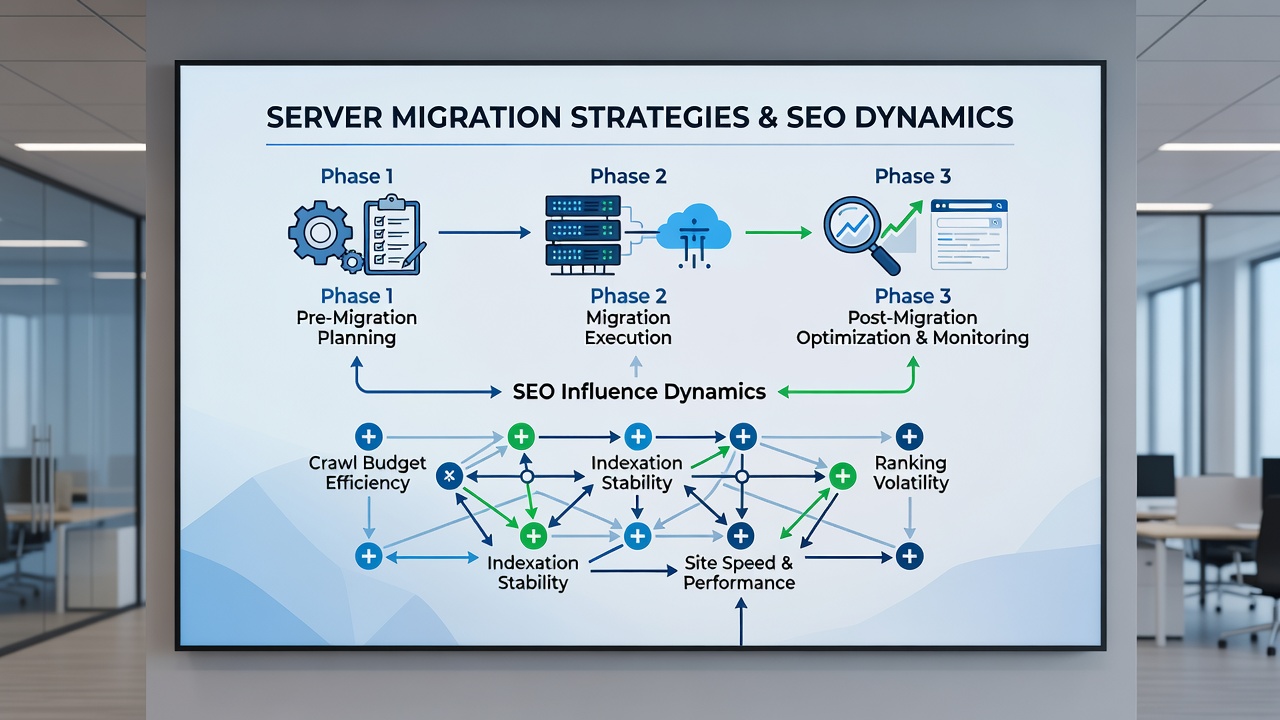
Server migration involves moving digital assets from one hosting environment to another and this process directly affects how search engines crawl, index, and rank websites because changes in server location, configuration, and performance alter crawl frequency along with page load times while also influencing user signals that algorithms track over extended periods.
Common Migration Approaches Used by Organizations
Organizations typically select from several established strategies when relocating servers and lift-and-shift methods transfer existing setups without major code changes whereas re-platforming introduces optimizations for cloud environments and these choices determine the extent of downtime along with the complexity of maintaining URL structures that search engines rely upon for consistent indexing. Research from academic institutions across Europe indicates that re-platforming often reduces long-term latency yet requires careful handling of redirects to prevent temporary ranking fluctuations that can last several weeks after the cutover completes.
Technical Elements That Shape SEO Outcomes
During any migration the preservation of HTTPS certificates, proper implementation of 301 redirects, and maintenance of consistent IP history all contribute to how search engine bots perceive site authority because sudden shifts in these elements can trigger re-evaluation periods where visibility drops until new signals stabilize. Data from regulatory bodies in Canada shows that sites maintaining continuous SSL configurations throughout transitions experience fewer interruptions in crawl budgets compared to those that encounter certificate mismatches even briefly and this pattern holds across multiple industry sectors.
Site speed metrics also shift noticeably when hardware or geographic server locations change and observers note that content delivery network integration during migration helps preserve or improve core web vitals scores while failure to optimize database queries post-migration frequently leads to increased bounce rates that indirectly influence ranking positions.
Observed Effects on Search Visibility and Rankings
Studies conducted by research groups in Australia reveal that migrations completed with minimal downtime maintain higher average rankings than those involving extended maintenance windows and the difference becomes most apparent in competitive niches where even small drops in crawl frequency allow competitors to gain ground. Those who have tracked large-scale moves report that authority signals tied to historical backlinks remain intact provided the domain and URL paths stay unchanged yet new server locations can alter perceived freshness if caching headers are not updated promptly.
What's interesting is how mobile-first indexing interacts with these transitions because search engines prioritize responsive performance on the new infrastructure and any degradation in mobile load times during the stabilization phase can compound visibility losses until adjustments take effect. Experts monitoring global datasets note that recovery timelines vary by site size with smaller properties often returning to prior positions within two weeks whereas enterprise domains may require up to six weeks for full rebalancing of ranking factors.
Monitoring and Adjustment Practices After Migration
Teams responsible for post-migration oversight commonly deploy log file analysis tools to verify that crawlers access all important paths without encountering errors and this step allows early detection of redirect chains that might otherwise dilute link equity over time. According to findings shared by the Australian Digital Transformation Agency, consistent monitoring of server response codes during the first month after cutover prevents minor issues from escalating into sustained ranking problems that affect organic traffic volumes.
One study revealed that sites incorporating automated performance checks alongside manual audits recover faster because they address emerging bottlenecks before search engine algorithms fully reprocess the updated infrastructure signals. Those who've studied this know that combining server logs with analytics platforms provides a clearer picture of how migration influences both technical health metrics and user engagement patterns that feed into ranking models.
Conclusion
Server migration strategies determine the smoothness of transitions that influence search engine optimization dynamics through their effects on crawlability, performance indicators, and authority preservation and organizations that plan for these factors achieve more stable outcomes across ranking fluctuations. Proper execution of redirects, speed optimizations, and ongoing monitoring ensures that visibility changes remain temporary rather than permanent and data from multiple regions continues to highlight the importance of these coordinated steps in maintaining search presence.